
Implementing CISA Guidance with Microsegmentation, File Integrity Monitoring, and Anti-Malware Integration
The Escalating Ransomware Threat to Government
Government agencies at federal, state, and local levels face an unprecedented ransomware crisis. According to recent data, ransomware attacks against government entities more than tripled between 2024 and 2025, establishing government as one of the most targeted sectors globally. In the first half of 2025 alone, 208 ransomware incidents targeted government organizations worldwide – a 65% increase compared to the same period in 2024. The United States remains the primary target, accounting for 35% of all government ransomware attacks, with 72 incidents recorded.
The financial impact is staggering. Ransomware attacks on U.S. government agencies have cost over $860 million in recovery expenses. The mean cost for state and local government organizations to recover from a ransomware attack reached $2.83 million in 2024 – more than double the $1.21 million reported in 2023. More concerning, 98% of ransomware attacks on state and local government organizations resulted in data encryption – a considerable increase from 76% in 2023 and the highest rate of data encryption across all sectors studied.
This comprehensive guide examines how government agencies can implement multi-layered ransomware defenses aligned with CISA guidance, with particular focus on microsegmentation, file integrity monitoring, and anti-malware integration – capabilities that TerraZone’s solutions for state and federal government systems deliver as core components of their Zero Trust security platform.
Understanding CISA’s Ransomware Defense Framework
CISA has positioned itself as the nation’s cyber defense agency and serves as the lead federal coordinator for critical infrastructure security. CISA has conducted 3,368 Pre-Ransomware Notifications since the inception of the initiative two years ago, with 2,131 conducted in 2024 alone. Through its #StopRansomware initiative, CISA provides actionable guidance to help organizations defend against evolving ransomware threats.
Key CISA Recommendations for Government Agencies
CISA’s Cross-Sector Cybersecurity Performance Goals (CPGs), developed in collaboration with NIST, provide a minimum set of practices and protections that all organizations should implement to protect against the most common and impactful threats. For ransomware defense, CISA’s guidance focuses on several critical areas:
Network Segmentation: CISA emphasizes the importance of implementing network segmentation – a physical or virtual architectural approach that divides a network into multiple segments, each acting as its own subnetwork to provide additional security and control that can help prevent or minimize the impact of a cyberattack.
Multi-Factor Authentication: Organizations should enable multifactor authentication (MFA) for all services to the extent possible, particularly for webmail, VPN, and accounts that access critical systems.
Endpoint Detection and Response: CISA recommends implementing tools that identify, detect, and investigate abnormal activity and potential traversal of ransomware with networking monitoring tools. EDR tools are particularly useful for detecting lateral connections as they have insight into common and uncommon network connections for each host.
Continuous Monitoring: Organizations should install, regularly update, and enable real-time detection for antivirus software on all hosts, while implementing secure logging collection and storage practices.
Patch Management: Organizations must prioritize remediating known exploited vulnerabilities, keeping all operating systems, software, and firmware up to date.
The Zero Trust Imperative
OMB Memorandum M-22-09, “Moving the U.S. Government Toward Zero Trust Cybersecurity Principles,” established a ZTA strategy aligned to CISA’s Zero Trust Maturity Model, requiring agencies to meet specific cybersecurity standards and objectives by the end of FY 2024.
CISA’s Zero Trust Maturity Model aims to assist agencies in the development of zero trust strategies and implementation plans. The maturity model includes five pillars and three cross-cutting capabilities based on the foundations of zero trust.
In July 2025, CISA released “Microsegmentation in Zero Trust, Part One: Introduction and Planning” as part of its ongoing efforts to support Federal Civilian Executive Branch agencies implementing zero trust architectures. This guidance provides a high-level overview of microsegmentation, focusing on its key concepts, associated challenges and potential benefits. Microsegmentation is identified as a critical component of ZTA that reduces the attack surface, limits lateral movement, and enhances visibility for monitoring smaller, isolated groups of resources.
Microsegmentation: Containing the Ransomware Blast Radius
Lateral movement represents one of the most dangerous phases of a ransomware attack. The latest federal advisories emphasize that the largest damage occurs when attackers exploit weaknesses to move laterally through both IT networks and operational technology environments. Once threat actors gain initial access, they traverse the network seeking high-value targets and sensitive data.
Why Traditional Segmentation Falls Short
Macrosegmentation has its limitations because it only focuses on north-south traffic. As data comes from outside the network, network segmentation is able to examine and filter it. However, if malicious activity is happening within the network, it could go undetected with traditional segmentation.
If a single device in a VLAN is compromised, the attacker can potentially move laterally to other devices within that VLAN – bypassing North-South defenses entirely. This reality forces a critical question: if you choose macrosegmentation alone, are you willing to surrender all assets in that large segment to a ransomware attack when one asset is compromised?
CISA’s 2025 guidance explicitly states that static zones and VLANs are no longer sufficient – segmentation must be dynamic and context-aware, factoring in identity, device posture, and behavior signals.
How Microsegmentation Stops Lateral Movement
To address the urgent threat posed by lateral movement, CISA recommends network segmentation and microsegmentation as key strategies. Creating distinct, isolated segments within networks drastically limits lateral movement post-breach.
Segmenting your network is a critical step for organizations looking to defend against sophisticated, targeted ransomware attacks. CISA’s advisory on Interlock ransomware specifically includes segmentation among its recommendations as one of the most effective defenses.
TerraZone’s truePass platform delivers identity-based microsegmentation that treats each endpoint as its own security zone. Rather than relying on network location or IP addresses, TerraZone enforces access controls based on user identity, device compliance, and application-level policies.
Key microsegmentation capabilities include:
- Identity-Based Firewall (IDFW): Embeds firewall capabilities directly at endpoints, ensuring only authenticated and authorized users can access sensitive data and systems. This identity-aware approach prevents unauthorized access even if credentials are stolen.
- Granular Access Controls: Implements least-privilege access at the workload level, restricting users to only the resources necessary for their roles while keeping all other network resources hidden.
- Zero Trust Network Access: Provides application-level connectivity that conceals network resources from unauthorized users, eliminating the broad network surface attacks that ransomware groups exploit.
- Policy Enforcement Points (PEPs): PEPs are distributed enforcement controls that operate at multiple OSI layers – including endpoint, container, hypervisor, and cloud-native services – using identity, device, and behavioral attributes to make real-time decisions.
For federal agencies pursuing Zero Trust implementation, TerraZone’s approach aligns directly with CISA’s guidance. The platform supports the five pillars of the Zero Trust Maturity Model while providing the granular segmentation controls that CISA identifies as critical for limiting ransomware damage. For detailed implementation guidance, agencies should reference our Guide to Implementing Zero Trust in Federal Agencies.
File Integrity Monitoring: Early Warning for Ransomware Activity
File Integrity Monitoring (FIM) serves as a critical detection layer in ransomware defense. FIM is a powerful tool for detecting cybersecurity incidents including malware, ransomware, and advanced persistent threats. It monitors and detects changes in files that may indicate a cyberattack, checking operating system, database, and application files for unauthorized changes or corruption.
Why FIM Is Essential for Ransomware Detection
Ransomware doesn’t just encrypt files – it modifies them. A well-tuned FIM system can detect the first signs of ransomware activity, such as mass file changes, before encryption completes.
When ransomware begins encrypting files across a network, FIM can detect these unauthorized modifications early, providing security teams the critical window needed to isolate affected systems and prevent widespread damage.
FIM can detect risks including insider threats, credential theft, brute force attacks often used as part of double-extortion ransomware attacks, advanced persistent threats where actors spend time in systems to exfiltrate data, and privilege escalation as part of lateral movement.
FIM and Zero Trust Architecture
NIST 800-207, the foundational Zero Trust document, specifically calls out the monitoring and measurement of the integrity of all owned and associated assets in Tenet #5. Zero Trust includes a workload component that requires integrity monitoring.
In ransomware scenarios, threat actors need to deliver a malicious payload – a piece of software that must be added and then executed to encrypt targeted data. Next-generation FIM provides detective controls to mitigate this risk by providing immediate identification when critical elements of infrastructure are changing without cause or authority.
TerraZone’s File Integrity Approach
TerraZone’s Secure Data Exchange platform incorporates comprehensive file monitoring and control capabilities that align with CISA’s recommendations:
Automated Security Policy Enforcement: By integrating with organizational security solutions, TerraZone automatically enforces security policies on all data flows. Incoming data is authenticated and scanned for viruses and malware using the organization’s scanning engines before reaching internal networks.
Real-Time File Activity Monitoring: TerraZone provides full auditing of all “where, what, who, and when” file access and exchange activities. This comprehensive tracking enables security teams to identify anomalous file behavior that may indicate ransomware activity.
Secure Virtual Vaults: Files are stored in encrypted digital vaults with strict access controls, ensuring that any unauthorized modification attempts are detected and blocked before they can propagate.
Integration with DLP Solutions: TerraZone connects with Data Loss Prevention tools to scan attached and uploaded data, providing an additional layer of protection against ransomware payloads disguised as legitimate files.
Anti-Malware Integration: Defense in Depth
Preventing ransomware attacks requires a multi-layered defense strategy that combines technical controls, organizational policies, and user awareness. Anti-malware integration forms a critical component of this defense-in-depth approach.
CISA’s Anti-Malware Recommendations
CISA advises organizations to install, regularly update, and enable real-time detection for antivirus software on all hosts. However, effective anti-malware defense extends beyond traditional signature-based detection.
The #StopRansomware Guide’s best practices section includes defense-in-depth measures like segmentation to cut down on lateral movement and better protect critical network assets and data. This means employing logical or physical means with zero trust architecture to separate various business units or departmental IT resources.
TerraZone’s Anti-Malware Integration
TerraZone’s platform provides seamless integration with enterprise anti-malware solutions through its SecureStream policy and workflow engine:
Multi-Vendor AV Support: TerraZone connects with leading antivirus and sanitization solutions including Check Point SandBlast, McAfee, Symantec SEP, Trend Micro OfficeScan, and OPSWAT, among others.
Scrubbing Zones for Incoming Data: Using TerraZone’s front-end technology, organizations can deploy unique scrubbing zones where incoming files are scanned prior to reaching the internal network. This ensures uploaded files are verified clean before they can pose a threat.
Content Disarm and Reconstruction (CDR): Integration with CDR solutions strips potentially malicious content from files while preserving usability, neutralizing zero-day threats that signature-based detection might miss.
Automated Scanning Workflows: TerraZone’s policy engine automatically routes files through appropriate scanning engines based on file type, source, and destination, ensuring comprehensive coverage without manual intervention.
Implementing a Multi-Layer Ransomware Defense Strategy
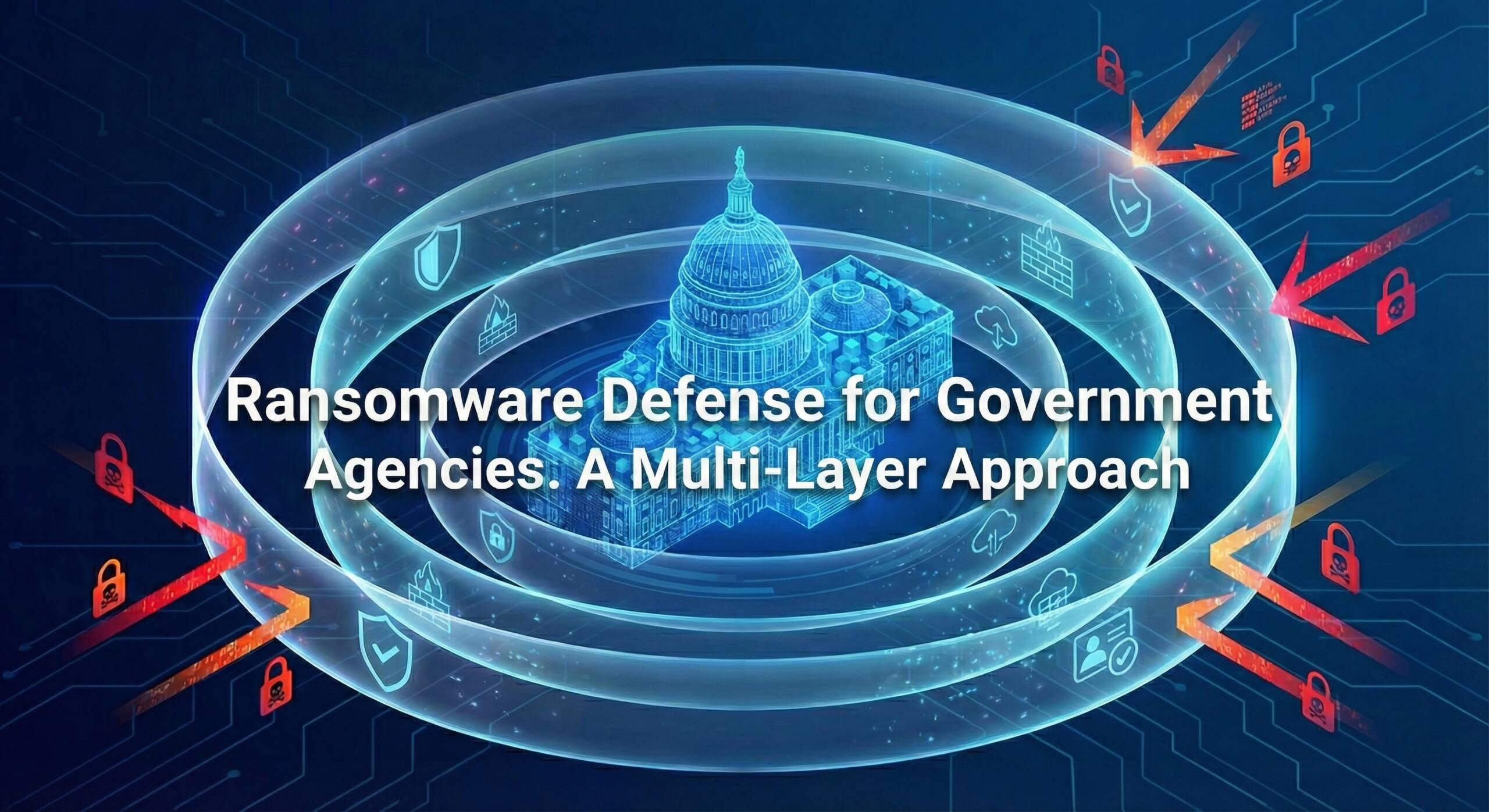
Building effective ransomware defenses requires a coordinated approach that addresses prevention, detection, containment, and recovery. Based on CISA guidance and industry best practices, government agencies should implement the following framework:
Layer 1: Prevention
Identity and Access Management:
- Implement phishing-resistant MFA for all users, especially those with privileged access
- Enforce least-privilege access policies that limit users to only necessary resources
- Deploy TerraZone’s identity-based segmentation to hide network resources from unauthorized users
Vulnerability Management:
- Prioritize patching of known exploited vulnerabilities, particularly in internet-facing systems
- Keep all operating systems, software, and firmware updated, as the FBI has identified approximately 900 entities exploited by Play ransomware actors alone as of May 2025.
- Disable unnecessary services and protocols that could serve as attack vectors
Email and Endpoint Security:
- Deploy advanced email filtering to block phishing attempts and malicious attachments
- Implement EDR solutions with behavioral detection capabilities
- Use TerraZone’s secure email gateway to scan and authenticate all incoming communications
Layer 2: Detection
Network Monitoring:
- Deploy continuous monitoring tools that identify lateral movement attempts
- Implement network traffic analysis to detect command-and-control communications
- Use TerraZone’s audit capabilities to track all file access and exchange activities
File Integrity Monitoring:
- Monitor critical system files, configurations, and databases for unauthorized changes
- Establish baselines and alert on deviations that may indicate ransomware activity
- Integrate FIM with SIEM solutions for correlated threat detection
User Behavior Analytics:
- Monitor for anomalous user behavior that may indicate compromised credentials
- Track privilege escalation attempts and unusual access patterns
- Alert on bulk file operations that may indicate encryption activity
Layer 3: Containment
Microsegmentation:
- Implement TerraZone’s identity-based microsegmentation to isolate network segments
- Microsegmentation plays a dual role: it contains threats during an incident and supports operational continuity by minimizing blast radius.
- Configure automatic isolation policies that trigger when threats are detected
Incident Response Automation:
- Pre-define response playbooks for ransomware scenarios
- Automate containment actions such as isolating infected endpoints
- Integrate with SOAR platforms for coordinated response
Layer 4: Recovery
Backup and Restoration:
- Organizations with immutable backups reported 4x faster recovery times and were 50% less likely to pay ransoms.
- Maintain offline, encrypted backups isolated from production networks
- Regularly test backup integrity and restoration procedures
Business Continuity:
- Develop and test incident response plans specific to ransomware
- Identify critical processes that must continue during an incident
- Establish manual workarounds for essential services
Government-Specific Considerations
Government agencies face unique challenges in ransomware defense that require tailored approaches:
Regulatory Compliance
Government organizations must comply with frameworks including FISMA, FedRAMP, and agency-specific requirements. TerraZone’s solutions support compliance through:
- Comprehensive audit trails documenting all access and data transfers
- Encryption meeting federal standards (AES 256-bit) for data at rest and in transit
- Integration with existing identity management systems including Active Directory and LDAP
- Role-based access controls aligned with separation of duties requirements
Legacy System Protection
Many government agencies operate legacy systems that cannot be easily patched or modernized. TerraZone addresses this challenge through:
- Reverse Access technology that protects legacy applications without requiring modifications
- Network segmentation that isolates legacy systems from modern infrastructure
- Secure gateways that mediate access to legacy resources while enforcing modern security policies
Multi-Agency Coordination
CISA urges organizations to promptly report ransomware incidents to the FBI’s Internet Crime Complaint Center, a local FBI Field Office, or CISA via the agency’s Incident Reporting System. TerraZone supports inter-agency collaboration through:
- Secure file sharing capabilities for incident response coordination
- Integration with federal threat intelligence sharing platforms
- Audit logs that support forensic investigation and reporting requirements
Conclusion: Building Resilient Government Systems
The ransomware threat to government agencies continues to intensify, with attacks becoming more sophisticated and damaging. In the past year, ransomware attacks against government entities more than tripled – from 95 incidents from April 2023-April 2024 to 322 from April 2024-April 2025, marking a 235.4% year-over-year spike.
Effective defense requires a multi-layered approach that combines prevention, detection, containment, and recovery capabilities. CISA’s guidance provides the framework, emphasizing network segmentation, continuous monitoring, and Zero Trust principles as foundational elements.
TerraZone’s integrated platform delivers the capabilities government agencies need to implement this framework:
- Microsegmentation that contains breaches and prevents lateral movement
- File integrity monitoring that detects ransomware activity in its earliest stages
- Anti-malware integration that neutralizes threats before they can execute
- Zero Trust architecture that assumes breach and verifies every access request
As CISA’s microsegmentation guidance emphasizes, zero trust implementation is not a single project but a journey requiring many years and a heavy level of investment. Government agencies should begin this journey now, implementing foundational controls while building toward comprehensive Zero Trust maturity.
For organizations ready to strengthen their ransomware defenses, TerraZone’s solutions for state and federal government systems provide the integrated capabilities needed to protect critical infrastructure and sensitive data against today’s most dangerous threats.
About TerraZone
TerraZone is a cybersecurity company dedicated to preventing unauthorized access and protecting high-risk data inside and outside the organization perimeter. TerraZone’s solutions enable government agencies to implement Zero Trust security while maintaining operational efficiency and regulatory compliance. For more information, visit www.terrazone.io.